


Life Cycle Assessment (LCA): The Backbone of Every Sustainability Claim
As transparency becomes a defining expectation across the construction and manufacturing sectors, the industry is moving beyond surface‑level sustainability labels. Today, clients, regulators, and certification bodies expect evidence‑based environmental performance, not broad statements or isolated documents. Sustainability is no longer about collecting certifications — it’s about understanding the full environmental profile of a product or system.
This is exactly where Life Cycle Assessment (LCA) plays a transformative role.
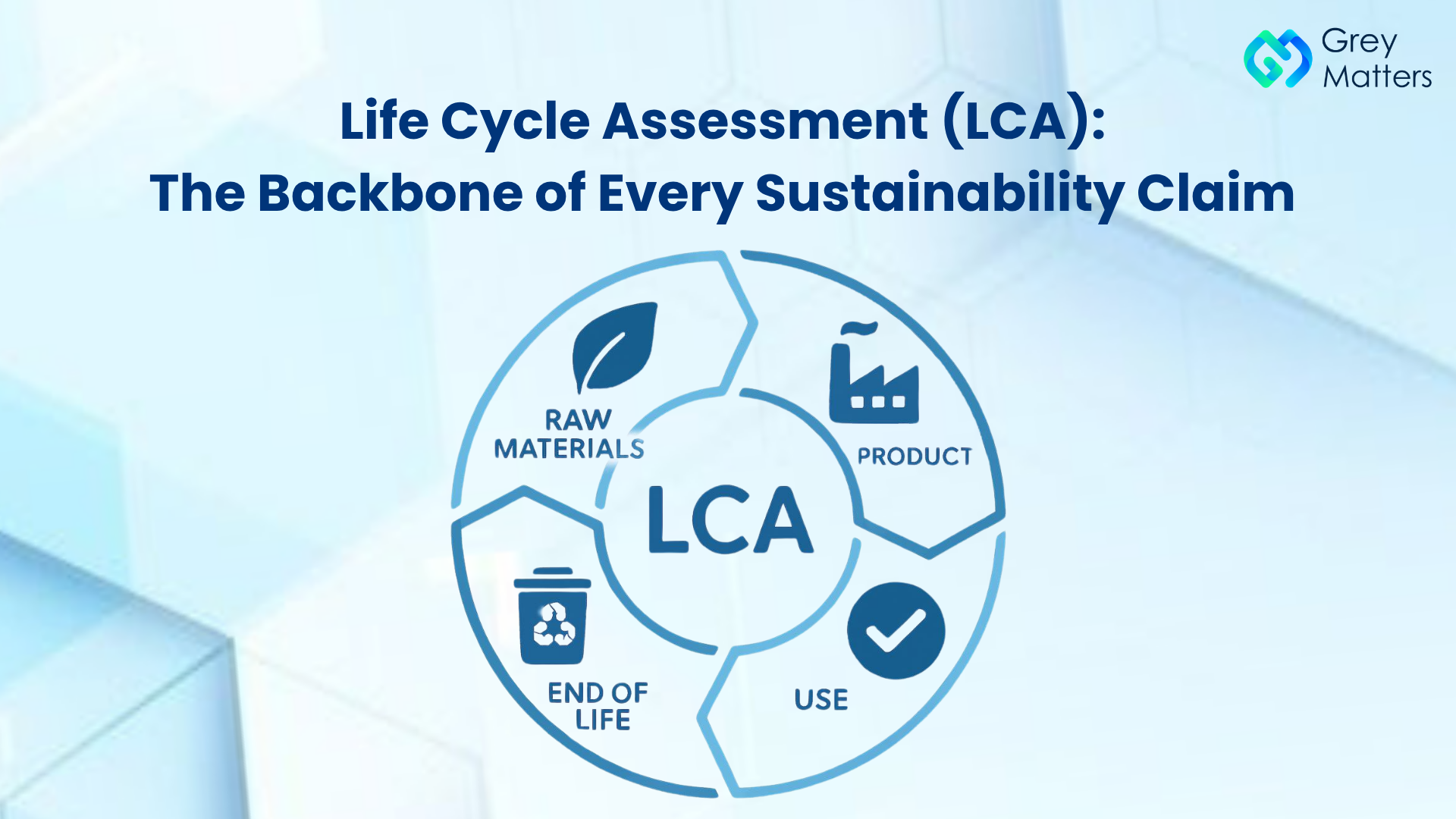
LCA is the scientific and methodological foundation behind Environmental Product Declarations (EPDs), Greenhouse Gas (GHG) reporting, and nearly every modern material transparency framework. By evaluating environmental impacts across the entire life cycle — from raw material extraction (A1) to end‑of‑life scenarios (C1–C4) — LCA provides a comprehensive, quantifiable, and standardized view of a product’s footprint.
In simple terms, LCA converts sustainability from a marketing claim into measurable, verifiable data.
Why LCA Matters More Than Ever
- It provides the foundation for credible EPDs rely entirely on LCA results. Without a robust, ISO‑compliant LCA, an EPD cannot be published or trusted. LCA ensures consistency in functional units, system boundaries, impact categories, and data quality — all essential for comparability.
- It helps manufacturers identify real opportunities for impact reduction LCA highlights environmental hotspots across the supply chain, enabling companies to:
- Optimize material choices
- Improve energy efficiency
- Reduce embodied carbon
- Enhance circularity strategies
This turns sustainability into a strategic design tool, not just a reporting exercise.
- It supports green building certifications LCA‑based EPDs contribute directly to credits in:
- LEED v4.1 (MR credits)
- Estidama
- BREEAM (Mat 01)
Project teams increasingly prefer suppliers who can provide LCA‑backed documentation.
- It enables companies to meet growing regulatory and client expectations Governments and major developers are tightening requirements around embodied carbon disclosure, circularity, and supply chain transparency. LCA provides the standardized methodology needed to comply with evolving regulations and procurement criteria.
- It drives smarter, more sustainable product design By modeling alternative scenarios — different raw materials, energy mixes, transport routes, or end‑of‑life pathways — LCA empowers manufacturers to make informed decisions early in the design process, where the greatest impact reductions can be achieved.
As the industry shifts toward deeper accountability and data‑driven sustainability, LCA is no longer optional. It has become a strategic necessity for manufacturers, consultants, and project teams who want to stay competitive, compliant, and credible.
LCA doesn’t just support sustainability claims — it validates them.


0 comments
Write a comment